

Full Stack Development Best Practices in 2024
Key patterns and tools for building maintainable full stack applications. Read insight from GlobeXcoders' engineering team.
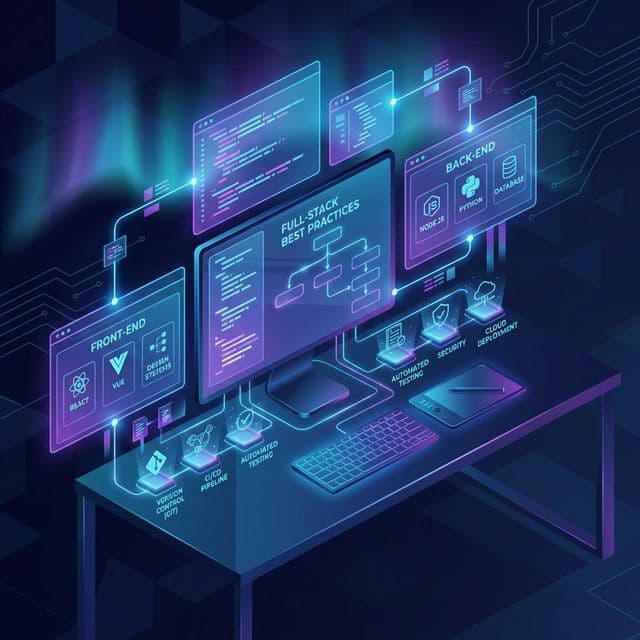
In 2024, the definition of Full Stack Development has evolved drastically from simple LAMP stack monolithic servers. At GlobeXcoders, we view modern full stack engineering as highly decoupled, edge-deployed, and type-safe from the database layer all the way to the client browser.
The paramount shift we've observed is the absolute dominance of React framework meta-architectures, specifically Next.js utilizing React Server Components. By shifting the computational rendering burden from the client device back to an Edge Server, we drastically reduce JavaScript payload sizes. This ensures near-instantaneous Time to Interactive (TTI) for users on sub-optimal mobile connections while providing Google crawlers with easily parseable HTML for flawless SEO.
On the backend, maintaining strict Type Safety across the network boundary has become non-negotiable. Tools like tRPC or GraphQL, combined with Prisma ORM, allow our engineers to share TypeScript interfaces globally. If a backend engineer drops a column in the Postgres database, the frontend compiler immediately throws an error, preventing disastrous runtime crashes in production.
Finally, CI/CD is no longer an afterthought—it is the bedrock. Vercel, AWS Amplify, and heavily optimized Docker-Kubernetes pipelines guarantee that every commit is mathematically tested, linted, and preview-deployed before it ever reaches the master branch. The era of 'it works on my machine' is dead; welcome to infrastructure as code.
Looking to implement these strategies?
GlobeXcoders engineers are ready to assess your enterprise architecture and build a scalable solution tailored to your exact business needs.
Schedule a Technical Consultation