

RAG vs Fine-Tuning: When to Use Which
A practical engineering guide to choosing between RAG vector retrieval and model fine-tuning for your enterprise AI use case.
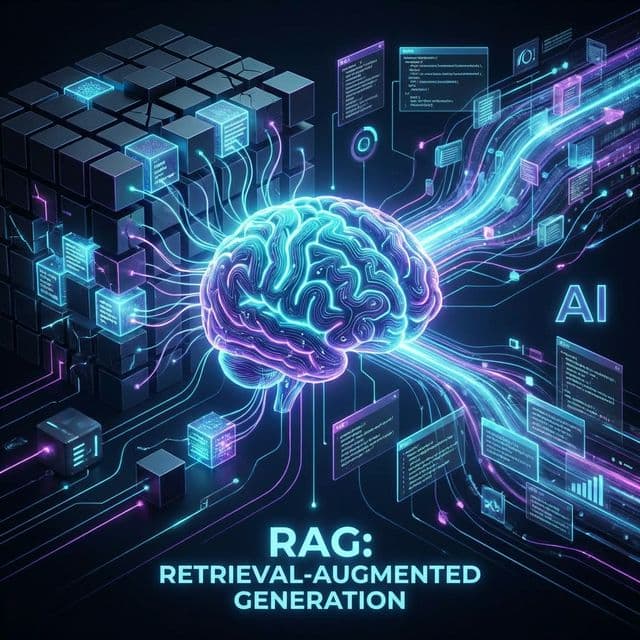
The most common question CTOs ask the AI engineering team at GlobeXcoders is: 'How do we make ChatGPT know about our private company data?' There are two architectural approaches to solve this: Model Fine-Tuning and Retrieval-Augmented Generation (RAG). Choosing the wrong one can cost hundreds of thousands of dollars in wasted compute.
Fine-tuning involves taking a pre-trained base model (like Llama 3) and running thousands of specialized training epochs to adjust its internal neural weights. This is fantastic if you need the AI to learn a new 'style' or 'format' of speaking—such as teaching it to output strict JSON schemas or speak like a 19th-century pirate. However, Fine-tuning is mathematically terrible at memorizing raw facts. If your company updates a product price tomorrow, you would have to expensively re-train the entire model.
Retrieval-Augmented Generation (RAG) is the enterprise standard. Instead of teaching the model facts via training, you store your private documents in a highly optimized Vector Database (Pinecone, Weaviate). When a user asks a question, the application mathematically searches the database for relevant paragraphs, retrieves them, and explicitly injects them into the prompt. The AI then simply acts as a 'summarizer' of the facts you dynamically provided.
At GlobeXcoders, our heuristic is simple: Use Fine-Tuning to teach the model HOW to think or format data. Use RAG to teach the model WHAT factual knowledge it currently has access to. For 95% of business use cases (Internal Wikis, Customer Support Bots, Contract Review), RAG is overwhelmingly superior, highly secure, and significantly cheaper to maintain.
Looking to implement these strategies?
GlobeXcoders engineers are ready to assess your enterprise architecture and build a scalable solution tailored to your exact business needs.
Schedule a Technical Consultation